Introduction
Scientists working with organoids, assembloids or spheroids often completely overlook a silent but important variable: oxygen. In a standard CO2 incubator, organoids are exposed to atmospheric oxygen at a partial pressure (pO₂) of roughly 130 -160 mmHg (approx. 17 - 21% oxygen), yet inside the human body most tissues experience much lower “physiological” oxygen, typically between 8 and 85 mmHg (approx. 1 - 11% oxygen).1 This mismatch can drive oxidative stress and unnatural cell behaviour in vitro.1,2
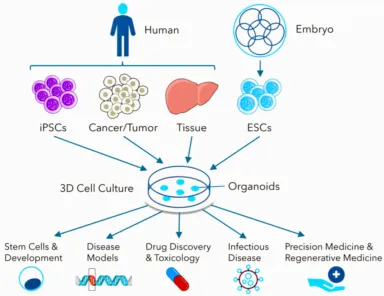
Controlling oxygen during cell culture to mimic the in vivo state has been shown to enhance an organoid’s physiological accuracy, cell viability, differentiation, reproducibility, and translational relevance.2
The article argues in favour of using physiological oxygen (“physioxia”) in organoid research, typically in the 30 – 60 mmHg oxygen range (≈ 4 - 8%), while openly acknowledging the limitations and nuances.
Along the way, I will highlight how dedicated tools for oxygen control and monitoring can make this practical at the bench.
Ambient oxygen and organoid viability: metabolic stress and necrotic cores
Culturing organoids at an oxygen partial pressure of around 160 mmHg (≈ 21% oxygen) is standard practice, but for many cell types this is hyperoxic rather than “normal”. Hyperoxia is associated with increased reactive oxygen species and oxidative stress, which can impair growth and differentiation.1,3 In kidney development models, for example, an oxygen partial pressure of 160 mmHg has been described as non-physiological and detrimental to normal tissue formation.3
As organoids grow, their oxygen problem compounds. Without vasculature, oxygen only diffuses a limited distance from the surface. Once organoids exceed a few hundred microns in diameter, the central regions can fall below critical oxygen levels and become hypoxic or even anoxic.4 Cells in these cores often die, forming a necrotic centre that reduces overall viability and introduces heterogeneous cell states across the organoid.
Lowering the external oxygen to a more physiological level, for example a pO₂ of around 40 mmHg (≈ 5%), can mitigate some of this stress. The goal is not to eliminate gradients entirely, but to bring both the outer and inner regions closer to their in vivo metabolic set-points. In human intestinal organoids (colonoids), cultures maintained at about 15 mmHg (≈ 2%) oxygen grew to a significantly larger viable cell mass than those kept at roughly 154 mmHg (≈ 20%) oxygen.5 The physioxic cultures also tended towards a lower pro-inflammatory response to cytokine stimulation compared with the hyperoxic condition.5
Controlling external oxygen concentration does not magically prevent all core hypoxia. A very large organoid at 40 mmHg oxygen can still develop a low-oxygen centre simply because diffusion limits are hard to escape without vasculature or perfusion. What physioxia can do, in many systems, is reduce chronic oxidative stress in the outer layers and delay or lessen the severity of necrosis at the core.2,3,5
Oxygen’s role in organoid development and function
Oxygen is not only fuel but is also a key cell signal. Stem cell niches in vivo are frequently hypoxic, often around 8 - 38 mmHg (≈ 1 - 5%) oxygen.1 These low oxygen tensions help maintain stemness, regulate proliferation, and control differentiation via hypoxia-inducible factors (HIFs) and downstream gene programmes. When organoids are cultured in similarly low ranges, these same mechanisms can operate as they do in tissues.
Physioxic cell culture is often adopted with the aim of better preserving stem and progenitor cell populations over time, supporting continued organoid growth while still allowing controlled differentiation along desired lineages.1,2 In multiple organoid systems, lower pO₂ has been linked to more realistic tissue architecture and marker expression.3,5
In neural tissues grown within perfused 3D soft microfluidic scaffolds, improved oxygen delivery prevents apoptosis in the inner core and supports more extensive neuronal and glial arborization than in non-perfused, diffusion-limited controls.4 Intestinal organoids cultured at physioxia form more in vivo-like crypt–villus structures and express epithelial markers in patterns closer to human gut tissue.1,5
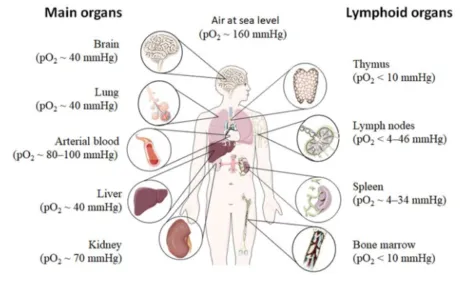
One striking example comes from kidney organoids. When cultured at about 54 mmHg (≈ 7%) oxygen, meant to mimic foetal kidney oxygenation, these organoids developed more extensive microvasculature, including greater endothelial sprouting and more interconnected vessel networks, than identical organoids kept at 160 mmHg oxygen.3
Hypoxic conditions upregulated pro-angiogenic factors and suppressed anti-angiogenic signals, promoting vascular development.3
The key point is that many organoids represent fetal or early tissue states, where lower oxygen is the norm. Matching the oxygen conditions during cell culture to these encountered in vivo allows the cells’ own developmental programmes to run closer to how they would in the body, instead of being pushed into a hyperoxic adaptation mode.
Reproducibility and experimental consistency
Oxygen control is also a reproducibility issue. Almost all incubators and hypoxia chambers still control their oxygen environment in units of percent. A reading of “5% oxygen” might be interpreted as equivalent conditions from one experiment to the next. In reality, that 5% is relative to ambient pressure, which can vary with weather, altitude, or HVAC conditions in the facility. A change in barometric pressure of even a few percent will affect the oxygen partial pressure that the cells experience, without any visible indication on a %-only display.6
When you work in absolute units of partial pressure, 40 mmHg oxygen is 40 mmHg oxygen, whether it is a stormy day or a sunny one, or whether the lab is situated at sea level or in Denver, Colorado.
Hypoxia systems that measure and control oxygen in absolute units of partial pressure can therefore deliver a more reproducible gas environment.6 This is especially important for organoids, because small changes in oxygen can shift the balance between proliferation, differentiation, and death, or alter sensitivity to drugs and signalling cues.
Stable physioxic control helps reduce the variability that comes from unintentional re-oxygenation or oxygen concentration drift. If organoids are regularly moved between normoxic and hypoxic environments, or if a chamber’s oxygen takes over 5 minutes to settle each time the door is opened, the cells are subjected to dynamic stresses that are hard to reproduce and nearly impossible to quantify without proper measurement. With a well-controlled physioxic workstation, those variables are greatly reduced, which makes it easier to attribute experimental outcomes to your planned interventions rather than to hidden fluctuations in oxygen.
Translational relevance in disease modeling and drug discovery
Many diseases are tightly linked to oxygen. Solid tumours, ischemic heart and brain tissue, inflamed gut, and fibrotic organs all involve local changes in tissue oxygen. If organoids are used to model these conditions but are grown in atmospheres of ambient oxygen, an important part of the disease environment is missing.1
Tumour biology is a clear example. Solid tumours in patients often harbour regions with very low oxygen, and these hypoxic zones are associated with greater invasiveness, altered metabolism, and resistance to therapy.1 Some tumour cell models collected, processed and propagated at physioxia (approx. 23 mmHg or 3% oxygen) have shown distinct differences in key signalling networks and sensitivity to targeted therapies compared with the same cells handled at ambient oxygen.5
These findings suggest that matching oxygen levels to in vivo conditions can reveal biologically and therapeutically relevant behaviour that may be missed under hyperoxic culture. It is realistic to expect that similar principles apply to tumour-derived organoids and other 3D tumour models.
The same logic applies to other systems. Inflammatory bowel disease, for example, may involve changes in the oxygen landscape of the intestinal mucosa. In the intestinal colonoid study mentioned earlier, cultures kept at 15 mmHg oxygen responded very differently to pro-inflammatory cytokines than those at roughly 154 mmHg oxygen, with a tendency towards a lower pro-inflammatory response under physioxia.5 This suggests that oxygen tension can influence not just viability and morphology, but also the way organoids integrate immune or inflammatory cues.
For drug discovery or mechanistic work, this matters. A candidate therapy that looks promising when tested on hyperoxic organoids may behave very differently in tissue that lives at 30–60 mmHg oxygen. Incorporating physiological oxygen into organoid workflows makes it more likely that in vitro findings will translate to animal models and ultimately to patients.
Challenges and considerations in physioxic culture
Implementing physioxia is not entirely plug-and-play. It requires equipment that can reduce and maintain oxygen at specific target values, typically by mixing nitrogen into the atmosphere, and it benefits from sensors that directly measure oxygen partial pressure (pO₂) rather than inferring it from gas percentages. This adds cost and some complexity compared with a conventional CO₂ incubator.
What is physiologically relevant for kidney (perhaps 54 mmHg oxygen) may not be ideal for colon (which may function closer to 15 - 40 mmHg oxygen), and so on.3,5 In one study, intestinal organoids grown at about 38 mmHg (≈ 5%) oxygen formed fewer crypt structures under a particular protocol, even though 15 mmHg (≈ 2%) oxygen had clear benefits in a different context.3,5 These differences underline the need to treat an oxygen partial pressure of 40 mmHg not as a magic number but as a sensible starting point that should be tuned to the biology of each model.
Finally, transitions between environments requires attention. Moving organoids from a physioxic chamber directly into room air for extended handling can cause re-oxygenation stress. Ideally, manipulations are done in a controlled atmosphere, or at least kept brief, to avoid repeatedly shocking the cells.
HypoxyLab: truly mimicking in vivo oxygen
The HypoxyLab™ workstation was designed to tackle exactly these control and reproducibility issues.
HypoxyLab is a compact, benchtop incubator that creates a fully controlled atmosphere for cell culture, including precise control of oxygen, CO₂, temperature and humidity.
Unlike systems that only regulate oxygen as a percentage, HypoxyLab measures and controls oxygen in partial pressure units (mmHg or kPa).6,7

This allows user to explicitly set an oxygen partial pressure value such as 40 mmHg to model a typical physioxic condition for many tissues, or an oxygen partial pressure of 15 mmHg if more extreme hypoxia conditions are required.
HypoxyLab automatically compensates for changes in barometric pressure, so a setting of 40 mmHg means precisely the same thing for cells in separate labs or on distinct times of the year.6
For organoid work, this allows the definition reproducibility of specific oxygen environments: fetal-like conditions for developing tissues, tumour-like ranges for cancer models, or healthy physioxia for baseline growth.
Practical features also matter. HypoxyLab is contamination-controlled and ergonomically designed, with a rapid-entry transfer hatch and clear interior workspace. Scientists can carry out media changes, passaging or imaging without repeatedly exposing cultures to room air. For organoids, this kind of stable physioxic incubator can become the “home base” where they live, differentiate and respond to interventions under controlled and documented oxygen conditions.
OxyLite: measuring media and organoid oxygen in real time
Setting a target oxygen level is one thing; knowing what your organoids experience is another. This is where the OxyLite™ oxygen monitor is particularly useful. OxyLite is a fibre-optic sensor system for measuring dissolved oxygen directly in culture media or gels.8
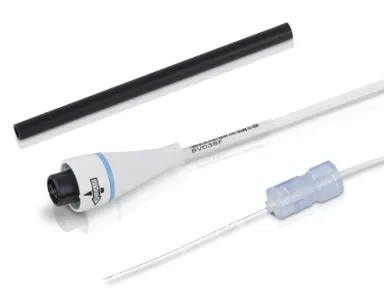
In an organoid workflow, an OxyLite sensor can be placed into the medium near an organoid, or into the matrix that embeds it. The scientist can thereby verify that the medium inside the chamber has equilibrated to the intended oxygen concentration and can also provide kinetics for how quickly the organoid consumes oxygen over time.
OxyLite also reports oxygen in absolute partial pressure units of mmHg, matching the oxygen control strategy employed in HypoxyLab. Together, these systems can turn oxygen from an assumed background condition into a measured and optimised parameter in organoid culture.
Conclusions
Organoids have opened a new window into human biology, but to make the most of them we need to recreate not just the right cells and matrices, but also the right environment. Oxygen is a central part of any cellular environment. Most human tissues function in the 8 - 85 mmHg oxygen range, not at ambient oxygen of 160 mmHg that dominates standard incubators.1
When organoids are grown under physiological oxygen tensions, they often exhibit better viability, more realistic differentiation, and responses to stimuli that are closer to what we see in vivo.3,5
There are caveats. Physioxia must be tuned to each organoid system, and it does not on its own solve every diffusion or size limit. It does, however, move the model in the right direction, and with modern tools for control and measurement it is no longer technically difficult to implement.
By combining a physioxic workstation such as HypoxyLab with direct oxygen monitoring using OxyLite, organoid researchers can define, deliver, and verify the oxygen partial pressure conditions their models experience. That shift, from assuming oxygen to managing it, is a key step toward more faithful and reproducible organoid science.
Sources
- Embrient Inc. (2023). Technical note summarising typical in vivo tissue oxygen ranges and benefits of physioxic culture for organoids and stem cells. Optimization of Physioxic Organoid Cell Culture for Research and Drug Discovery
- Croft, J. (2023). 5 Reasons to Control Oxygen in Organoid Models. Oxford Optronix Resources
- Schumacher, A. et al. (2022). Enhanced microvasculature formation and patterning in iPSC-derived kidney organoids cultured in physiological hypoxia. Frontiers in Bioengineering and Biotechnology, 10:860138
- Grebenyuk, S. et al. (2023). Large-scale perfused tissues via synthetic 3D soft microfluidics. Nature Communications, 14:193
- Walaas, G. A. et al. (2023). Physiological hypoxia improves growth and functional differentiation of human intestinal epithelial organoids. Frontiers in Immunology, 14:1095812.
- Croft, J. (2022). Addressing the Reproducibility Issue within Hypoxia Chambers. Oxford Optronix Resources
- Oxford Optronix HypoxyLab™ product information.
- Oxford Optronix OxyLite™ product information.
Author: Justin Croft, November 2025