Standout 2026 articles citing our monitors

Serving the scientific community
Our OxyLite™ and OxyFlo™ products are cited in a constantly growing number of peer-reviewed articles (click here for an exhaustive list).
Here we briefly highlight two standout 2026 articles that have caught our attention.
Assessing blood flow during aortic occlusion in haemorrhagic shock
The 2026 study by Tascón et al. in the Journal of Trauma and Acute Care Surgery uses our laser-Doppler blood flow monitor to assess intestinal microcirculatory blood flow in a swine model of haemorrhagic shock.
The authors investigate the effects of partial versus complete resuscitative endovascular balloon occlusion of the aorta, known as REBOA, on macro and microcirculatory blood flow in haemorrhagic shock.
The OxyFlo™ Pro system was used to measure laser Doppler blood flow at the jejunal serosa and mucosa in a controlled swine model. These measurements allowed the team to evaluate how partial and total aortic occlusion affected intestinal microvascular perfusion during balloon inflation and following reperfusion.

The study found that partial REBOA preserved regional mesenteric and intestinal microcirculatory blood flow during balloon occlusion and early reperfusion compared with total REBOA. Partial REBOA was also associated with more favourable mesenteric venous pH and lactate values during the occlusion and reperfusion phases.
“Studies like this show why direct, local measurement of microvascular blood flow matters,” said Justin Croft, Vice President at Oxford Optronix North America. “In complex models such as hemorrhagic shock, systemic pressure alone does not always tell the full story. Measuring tissue-level perfusion can help researchers better understand how interventions affect vulnerable organs and vascular beds.”
The findings add to a growing body of research using Oxford Optronix technology to study tissue perfusion, oxygenation, ischemia-reperfusion injury, and preclinical models of critical illness.
Linking early-life brain hypoxia to hypertension-related sympathetic dysfunction
The 2026 Journal of Physiology article by Vieira et al. describes the use of direct brain tissue oxygen monitoring to explore how neonatal breathing irregularities may contribute to later cardiovascular dysfunction in an experimental model of essential hypertension.
The study examines spontaneously hypertensive rats during early development and finds that neonatal animals exhibited hypoventilation, fluctuating respiratory frequency, increased apnoea and breath-hold episodes, oxygen desaturation, and reduced brain oxygen levels. These abnormalities persist during the postnatal period and are linked to later sympathetic dysfunction.
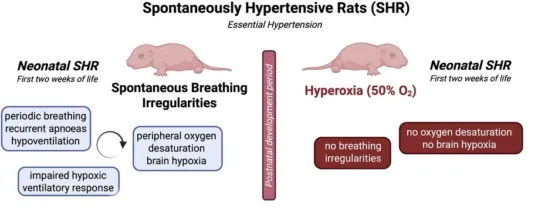
The OxyLite™ was employed to provide real-time measurements of brain tissue oxygen and temperature in neonatal animals. The OxyLite (optode) oxygen sensor was inserted into the brain cortex to directly assess tissue partial pressure of oxygen (pO₂).
The work reports that early-life respiratory irregularities and hypoxaemia may contribute to the development of sympathetic hyperactivity in essential hypertension. And that exposure to hyperoxia during the first two weeks of life reduced sympathetic vasoconstrictor tone in adult spontaneously hypertensive rats.
“Direct tissue oxygen measurement is especially important in studies where oxygen is part of the biology, not just an environmental condition,” said Justin Croft, Vice President at Oxford Optronix North America. “This work highlights how local brain oxygenation measurements can help researchers connect early physiological events with long-term cardiovascular outcomes.”
The publication reinforces the value of direct pO₂ monitoring in neuroscience, developmental physiology, cardiovascular research, and models where hypoxia may influence long-term disease mechanisms.
Bookmark our news feed and follow us on X for news and updates from Oxford Optronix.